News

  • Project

2nd INFIRE National Roundtable | Bulgaria

19/02/2026

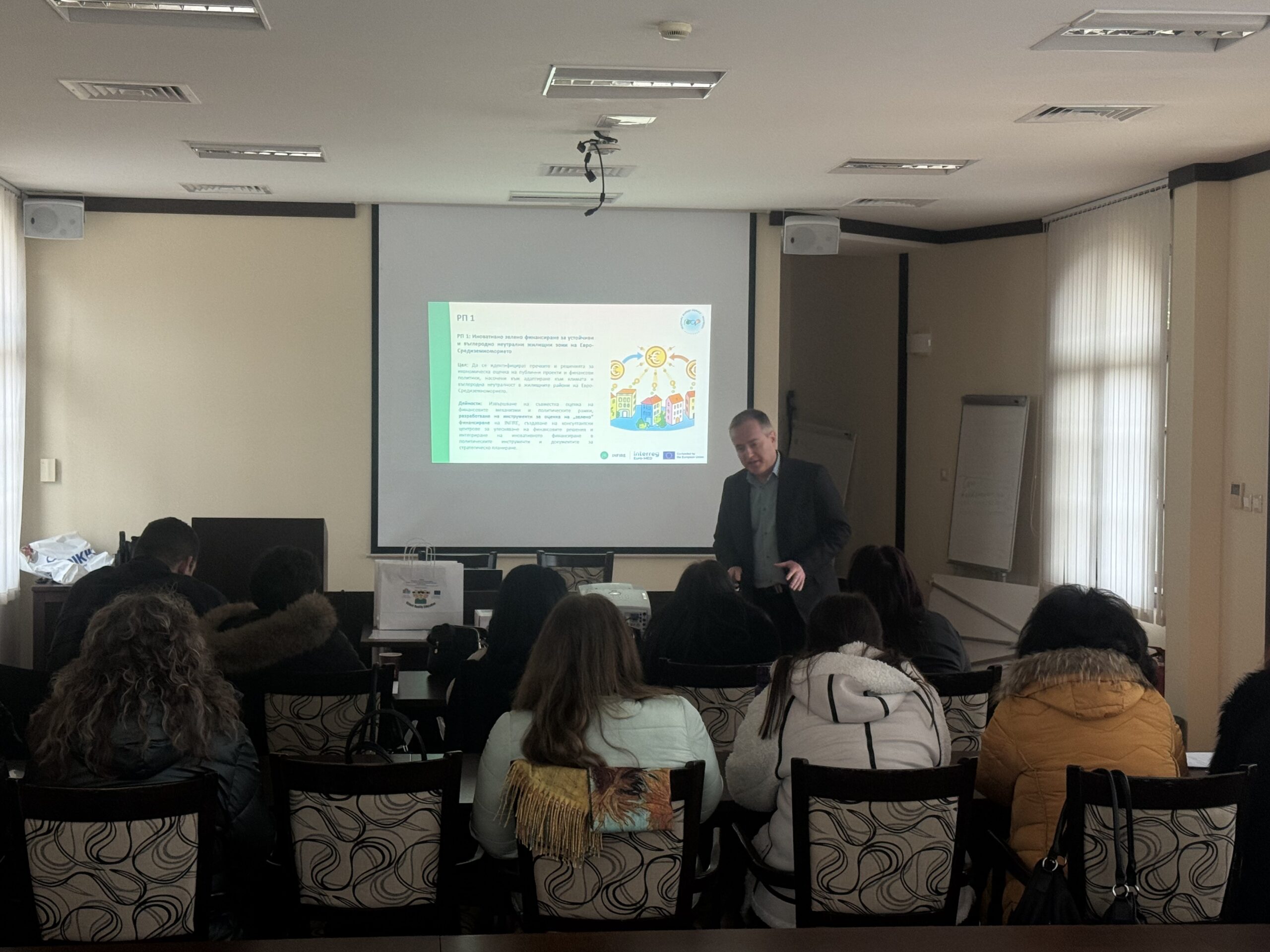
On 11 February 2026, the second National Roundtable under the INFIRE project  was held in Peshtera, Bulgaria. The event was organised by the Regional Energy Agency of Pazardjik (REAP) and brought together representatives from local administrations, energy and environmental agencies, SME associations and other relevant stakeholders.

The roundtable opened with a welcome address by Mr. Georgi Simeonov, Project Manager at REAP, followed by a presentation of the project’s objectives and partnership. Participants reviewed key INFIRE results, including an assessment of public authorities’ capacities to engage in climate adaptation and carbon neutrality planning, as well as an analysis of existing financing instruments supporting climate-related investments.

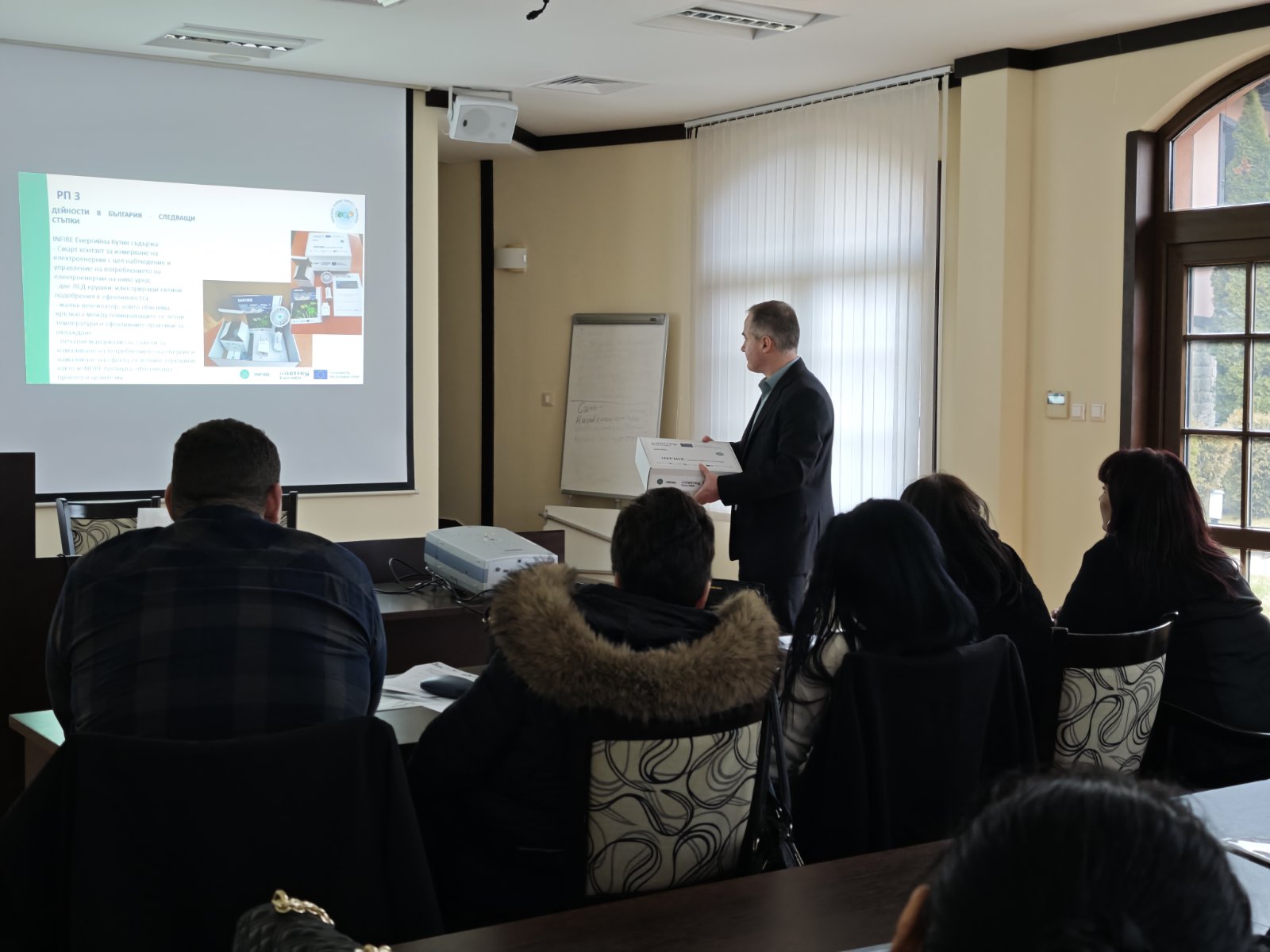
A major highlight of the event was the progress made in establishing the Energy Help Desk (EHD) in Peshtera under Work Package 3. The EHD will serve as a local advisory hub, providing citizens with guidance on energy efficiency, energy poverty, behavioural changes, and available funding schemes. This initiative represents an important step toward building a more energy-resilient and socially inclusive community.

In the coming months, REAP and municipal officers will focus on strengthening the interaction between the EHD and vulnerable households through two complementary activities: small workshops for citizens at the Peshtera administrative building and home visits offering personalised advice in a supportive environment.

To facilitate these activities, the EHD will use the “INFIRE Energy Box” – a practical engagement tool designed to help households better understand and optimise their energy consumption. The box includes a smart meter plug to monitor appliance-level electricity use, LED bulbs demonstrating low-cost efficiency improvements, a small fan to explain efficient cooling practices during rising summer temperatures, and printed materials with practical energy-saving tips and project information.

Participants also exchanged good practices from partner regions across the Euro-MED area, such as bio-solar roofs, nature-based solutions, green schoolyards, decarbonised heating systems, mobility hubs, and innovative decision-support tools for heating optimisation. These examples highlight the added value of transnational cooperation and knowledge exchange within the INFIRE partnership.

The event concluded by reinforcing collaboration among national and local stakeholders involved in sustainable energy and climate planning in Bulgaria and underlining INFIRE’s potential to support policy development and practical climate action beyond the pilot regions.